
Grace Kamps ‘29
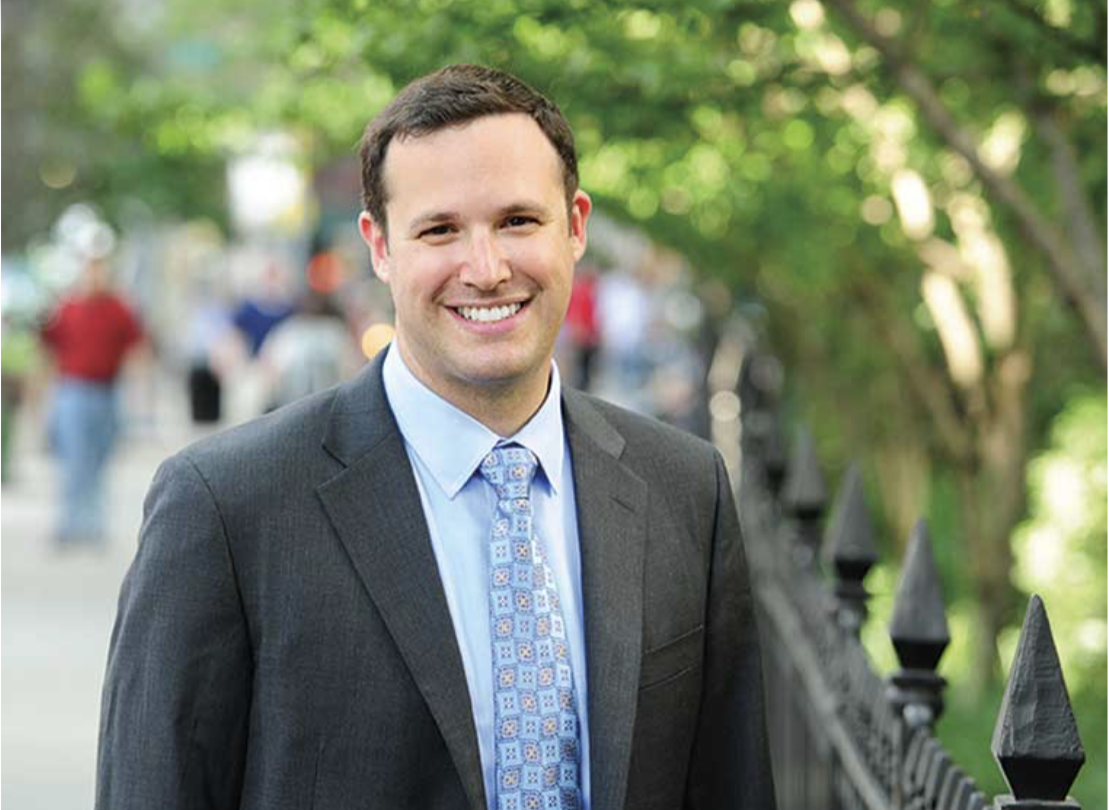
Photo from sarahlawrence.edu
Tucked within a corner office held together by buckling bookshelves and photos of donnee groups past, resides the infamous Sarah Lawrence College (SLC) politics professor, Samuel Abrams. At first glance, Abrams comes off as nothing out of the ordinary: typically sporting a ballcap of a Philly pro team (to which he is native), geometric glasses and casual wear. However, his notoriety comes not from his appearance, or even what he says in class, but instead from his outsized political stances in the media and near-total seclusion as an SLC professor.
Abrams, who is celebrating his seventeenth year at SLC, stands out on campus as one of the sole conservative-leaning faculty members and is not silent about his contentious views. I am a donnee of Abrams and with that comes great confusion. A typical response to finding out who my don is often sparks worried glances, concerned squeaks, or an occasional “how is that?” Across SLC's 42-acre campus, talk flies among faculty and students. This begs the question: who is Samuel Abrams, and what is he doing here? “I feel that I need to speak out,” said Abrams in a recent interview in his dimly lit Titsworth corner office. “Not that I necessarily wanted to, but I had to because I wanted to preserve and save who we are.”
Abrams’ controversies are rooted in his right-leaning politics and articles which, in the past, have criticised SLC. According to Abrams, “Activism has encroached in the education process.” In an article published in Sept., Abrams critiqued today’s education as incorporating too many “personal narratives” and inquiries rather than simply teaching facts. This, he said, belittles the strength of an educator and instead creates a facilitator. “Promoting ideologies and political activism is simply not the proper role of the teacher in the classroom,” he said.
This statement comes from Abrams’ difficulties in outreach in recent years to the SLC student body. While ten years ago Abrams may have had a line of students waiting to interview for a course with him, this summer only one student interviewed for an offered course. This student, whom he would not name, “was scared to even share that they were interviewing, because,” Abrams continued, “there could be a problem if it was found out.” Though Abrams is adamant about his desire to act as a catalyst for open conversation and acceptance on campus, some faculty members find this claim inauthentic.
Jewish studies professor Joel Swanson is among SLC faculty who have notably been at odds with Abrams. The conflict flared visibly in a 2025 article in which Abrams accused Swanson of portraying an inaccurate description of the school’s handling of a Student Justice for Palestine (SJP) protest and, according to Abrams, displayed “rampant anti-semitism.”
While Swanson agrees with the need for students to be comfortable speaking out in class and taking risks, his disagreement lies more in the methodology and honesty in doing so. “I think Professor Abrams is much more interested in using the powers of the federal government to shut down student speech in ways I ultimately think is not conducive to creating the kind of environment that we want here on campus where students feel like they can take risks and ask hard questions,” Swanson stated regarding Abrams’ supposed support of the federal investigation into alleged antisemitism on campus. Swanson then pushed the idea that, “the federal government’s attempt to use certain allegations of anti-Semitism to shut down free expression on campuses is ultimately bad for students.”
Abrams sees things differently, “I don’t see anybody on campus from the Feds.” From Abrams’ perspective, the federal government’s investigation does not directly influence conversation on campus, nor in the classroom: “I don’t have any contact with some federal government group saying don’t talk freely or have threatened anything with my class or have to see anything with my classes.”
Professor Swanson believes SLC is far more nuanced than the larger media has portrayed and wider perspectives in the classroom are largely accepted and “quite sophisticated.” Another, perhaps predominant, issue Swanson has taken with Abrams lies not within political opposition, but instead Abrams’ failure to have the sit-down conversation he has claimed to highly value. “I have emailed him asking to speak face-to-face and he has never once responded,” states Swanson, “he talks about viewpoint diversity and how we should be willing to sit down with each other and speak … the door is open.” When questioned about his failure to reply, Abrams garnered a short retort: “It isn’t appropriate for me to comment on an untenured faculty member at the moment,” he continued, “there are huge charges for me doing that.”
However, the campus’s aversion to Professor Abrams has not dissuaded him. His family instilled in him from a young age the elements of debate, argument, and “trying how to figure out how to make the world a better place,” which guide Abrams. “I love our mission and I love the students.” Some students do return this sentiment. Sophomore Henry Tassonne, a donnee and student of Abrams, exhibited a soft spot for the professor. “He’s a really respectful guy and clearly very smart,” said Tassonne, “he clearly has a very strong code of ethics that he lives by.” Tassonne also emphasized that a majority of the distaste for Abrams is expressed in one-sided measures. “I know so many kids that hate Sam because their own teachers have ripped him to shreds, which is something he wouldn’t do to other professors.” Another sophomore and donnee of Abrams, Kya Enders, doesn’t agree with Tassonne’s assertion of Abrams lack of critique towards other faculty. “He has and will continue to,” Enders stated. However, she did also admit to Abrams being “a very unbiased professor,” supporting his principles of inviting classroom nuance.
Since his start in 2009, Professor Samuel Abrams has become well known on campus, for better or worse. Abrams has stayed through the turmoil because, for him, “this is one of the few places that still leans into the idea of liberal arts and the humanities and it's why I push so hard, and people may not like me, because I actually want to preserve that and keep that going, because it changed my life.”